

Dallas-Fort Worth International Airport processes nearly 87 million passengers a year, making it one of the busiest travel hubs on the planet. For the remote professional, that statistic cuts both ways. On one hand, DFW has invested heavily in infrastructure to accommodate business travelers, and the result is one of the more genuinely work-friendly airports in the country. On the other hand, 87 million passengers means noise, competition for power outlets and the particular misery of trying to take a client call while someone three seats over is streaming a game show at full volume.
The difference between a productive layover and a lost afternoon comes down to knowing where to go before you need it. Here is a practical breakdown of every viable option at DFW for remote work and video calls, ranked honestly by what they deliver.
The Best Overall Option: Private Suites in Terminal A and Terminal D
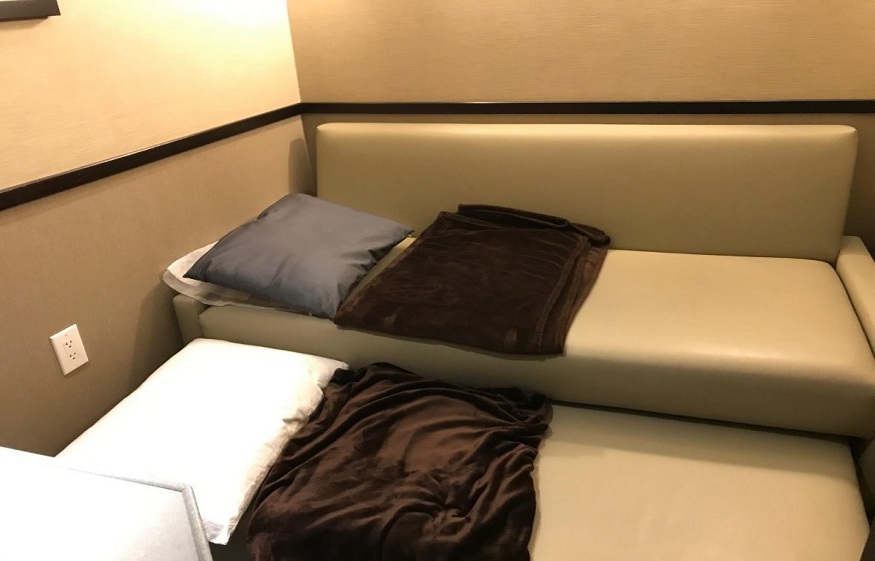
If you have a call that requires your full attention, a quiet background and zero risk of a gate announcement cutting through your audio mid-sentence, the only real answer is a private room. Minute Suites at DFW operates two locations inside the airport, one near Gate A39 in Terminal A and one near Gate D23 in Terminal D, and both deliver exactly what remote workers most need in an airport: a locked door.
Each suite comes with a dedicated work desk, high-speed Wi-Fi, a daybed, a flat-screen TV and a sound-masking system that blocks out the terminal entirely. The Terminal D location adds private shower access, which matters more than it sounds if you’re managing a full workday across time zones and multiple flights. Suites are available by the hour, 24 hours a day, and Priority Pass cardholders receive the first hour complimentary with discounted rates beyond that. For a Zoom call with a client, a board presentation or any meeting where professional optics matter, a private suite is the only option at DFW that eliminates every variable you can’t control in a shared space.
Business Traveler magazine ranked DFW among the top airports in the country for remote work, specifically citing the availability of Minute Suites as a differentiating factor and describing the suites as something close to a reset button for professionals managing back-to-back connections and calls. The hourly model is particularly well-suited to the modern remote professional’s reality: you don’t need a hotel room, you need 90 minutes of privacy, and you need to be back at your gate without having left the secure area.
Read More: How High-End Villas in Costa Rica Design Suites for Privacy
The Capital One Lounge
For business travelers who need solid Wi-Fi, reliable power and a professional enough environment for a video call but don’t require complete privacy, the Capital One Lounge in Terminal D near Gate D22 is the strongest shared-space option at DFW and one of the best airport work environments in the country.
The Wi-Fi is fast enough to handle data-intensive tasks and video streaming without the lag and dropout issues that characterize most airport public networks. Every seat comes with outlet access, the food is locally sourced and genuinely good rather than the afterthought buffet that defines most airline lounges, and the design includes dedicated quiet work zones separated from the bar and dining areas. The lounge opened in 2021 as Capital One’s first airport location and has set a consistent standard for what a business-oriented lounge can look like when it’s designed with the traveler’s needs in mind rather than as a brand marketing exercise. The local craft beer program features the Yellow Rose Airport Pilsner from Dallas-based 3 Nations Brewing, which is a small detail that signals the kind of attention to place that distinguishes a well-run operation from a generic one.
Access is open to Capital One Venture X cardholders and their guests, and a $90 day pass is available for anyone with a same-day boarding pass who doesn’t carry the card. The three-hour limit per visit is worth factoring into your planning if you have a long layover, though for a standard connection it’s more than sufficient.
The Centurion Lounge
The American Express Centurion Lounge in Terminal D near Gate D18 is a legitimate premium experience with chef-prepared food, a full bar, spa services and semi-private work areas, and it earns its reputation as one of the better lounges in the DFW network. For Zoom calls specifically, though, it comes with a caveat worth acknowledging: the shared work areas provide relative quiet but not the acoustic isolation that a client-facing call often requires. Background noise from the bar and dining areas bleeds into the workspace depending on where you sit and how busy the lounge is, and DFW’s Centurion tends to see more traffic than some other locations in the network.
As a place to respond to emails, work through a document or prep for an afternoon call, it’s excellent. As a place to take the call itself, it’s hit or miss in a way that depends entirely on factors you can’t control at check-in. Amex Platinum and Centurion cardholders access it for free, and the food alone makes it worth the walk to Terminal D if you’re flying out of another terminal and have the time. Just factor in the acoustic unpredictability if your call is client-facing.
The Free Travel Lounges
DFW operates a network of free Travel Lounges throughout the airport, located at Gates B28, C8, C26 and E8, that offer recliner seating, workstation-style seating and power outlets at every position. No membership, no card required, no day pass fee. For solo work sessions, these spaces punch well above their price point.
For video calls, they’re a different story. The Travel Lounges are comfortable, reasonably quiet and considerably better than gate seating, but they’re open and shared environments without any acoustic separation. Background noise is manageable but present, and the risk of a conversation happening directly behind you during a call is real. Use them for focused solo work in between calls, not for the calls themselves.
Gate Seating and Coffee Shops
DFW’s public Wi-Fi, branded as DFW Public 5G Wi-Fi, is available throughout all five terminals and performs reasonably well for basic tasks. Terminal D tends to get stronger reviews for workability given its broader gate seating areas and international layout, and window seating along the terminal walls provides the best combination of outlet access, natural light and slightly reduced foot traffic.
Gate seating for a Zoom call is viable for a quick, low-stakes check-in, but it introduces variables that compound: audio quality, visual background, the gate announcement that always seems to happen at the exact wrong moment. Coffee shops throughout the terminals face the same problem at higher volume. They’re fine for answering emails over a cortado. They’re not where you take the call that determines whether a client renews their contract.
The honest assessment is that DFW’s public spaces are excellent for the kind of solo productivity that doesn’t require audio, and genuinely unreliable for anything that does.
What Matters When You’re Choosing
The remote professional traveling through DFW in 2026 has more options than at any point in the airport’s history, and the temptation is to treat them as interchangeable. They’re not. The decision framework is straightforward: if the call has professional stakes, book a private suite and remove the variables entirely. If you need a solid environment for solo work with reliable connectivity, the Capital One Lounge is the strongest freely-accessible option for the right cardholder. If you’re between calls and need a comfortable place to work without spending anything, the Travel Lounges deliver more than their zero-dollar price point suggests.
DFW handles nearly 87 million passengers a year, and the airport has clearly put thought into serving the business traveler within that volume. The travelers who get the most out of it are the ones who show up with a plan.