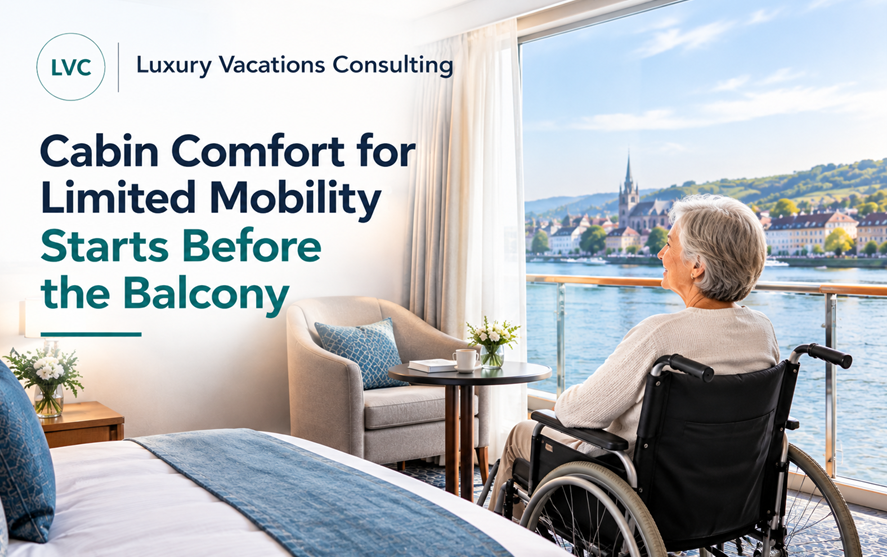

For a traveler with limited mobility, the best cabin is not necessarily the one with the largest balcony or the highest deck. Start with the full journey from the cabin to the lounge, dining room, gangway, and coach. Distance, thresholds, bathroom layout, elevator access, and a companion’s needs can matter more than the view.
Map the route, not just the room
A deck plan is most useful when you read it as a movement map. Locate the cabin in relation to the elevator, dining room, main lounge, and usual exit point. A cabin that looks central on one deck may still require repeated corridors or level changes during the day.
Read More: The simple South Indian meals that became part of my Tiruvannamalai journey
Then examine the room itself. Ask for the exact doorway and bathroom configuration, not a general statement that the cabin is “spacious.” Determine whether there are thresholds, whether the shower setup works for the traveler, and whether mobility equipment can be stored without obstructing the other guest. Do not assume a standard cabin is accessible simply because the overall square footage looks generous.
Balcony design can affect the way interior space is used. It is worth reviewing a French balcony vs. twin-balcony space comparison before treating an exterior platform as the priority.
Questions to verify before deposit
Use this checklist with the cruise line or advisor:
- What is the exact distance and route from the cabin to the elevator and main public rooms?
- Are there steps or raised thresholds between the room, bathroom, balcony area, or corridor?
- Which mobility equipment is accepted, and where can it be stored or charged?
- Does the elevator reach every guest deck and the usual embarkation level?
- How might rafting alongside another ship affect boarding?
- What assistance is actually provided, and what must a traveling companion manage?
Answers may vary by ship, berth, water conditions, and local infrastructure. A crew member who helps with logistics is not a substitute for personal mobility assistance, so define needs precisely.
Include the shore day
Cabin comfort solves only one part of the trip. Gangways can change with docking conditions, and historic towns may include cobbles, slopes, steps, or walking routes that are difficult to shorten. Excursion transport and meeting points also deserve the same scrutiny as the stateroom.
For a broader planning guidance, read this guide to European river cruises for seniors with limited mobility and separate “can manage the ship” from “can enjoy the planned itinerary.”
The goal is not to find a universally accessible ship. It is to confirm that the exact cabin, onboard route, and shore plan work for both travelers. A neutral written list of non-negotiable needs makes that conversation far more useful than choosing from balcony photographs alone.
Read More: When Air Medical Missions Enter High-Risk Environments